


Do Dog Treat Ingredients Actually Matter?
When choosing dog treats, it's tempting to focus on what your dog enjoys the most, or simply the cheapest and most convenient options available. However, whilst taste matters, what goes into the treat is equally, or perhaps, even more important.
Dog treats can be used for training, rewarding good behaviour or reducing boredom, all whilst being part of a balanced, healthy diet. We explore why ingredients are important and exactly what you should be looking for. In this article:
- Why dog treat ingredients matter
- What to look for in dog treat ingredients
- Are natural dog treats healthier?
- Ingredients that benefit your dog
- Other factors to consider for choosing a dog treat
- Where to order healthy treats
- FAQs
Why dog treat ingredients matter
An ingredients list tells you what your dog is actually eating. Just because something is named something appealing for dogs or healthy (e.g. dental sticks; low fat treats; bacon strips), does not mean it's suitable for your dog. Whilst some treats contain a refined, healthy ingredients list, many others contain a mixture of additives, preservatives and ingredients no good for your dog.
Single ingredient treats can make it much easier to identify what your dog is eating, however, that doesn't always mean it's healthy. It's important to consider what ingredients can trigger allergies and sensitive stomachs, as well as your dog's size and dietary requirements. Choosing treats with a clear ingredient list makes monitoring their diet much easier.
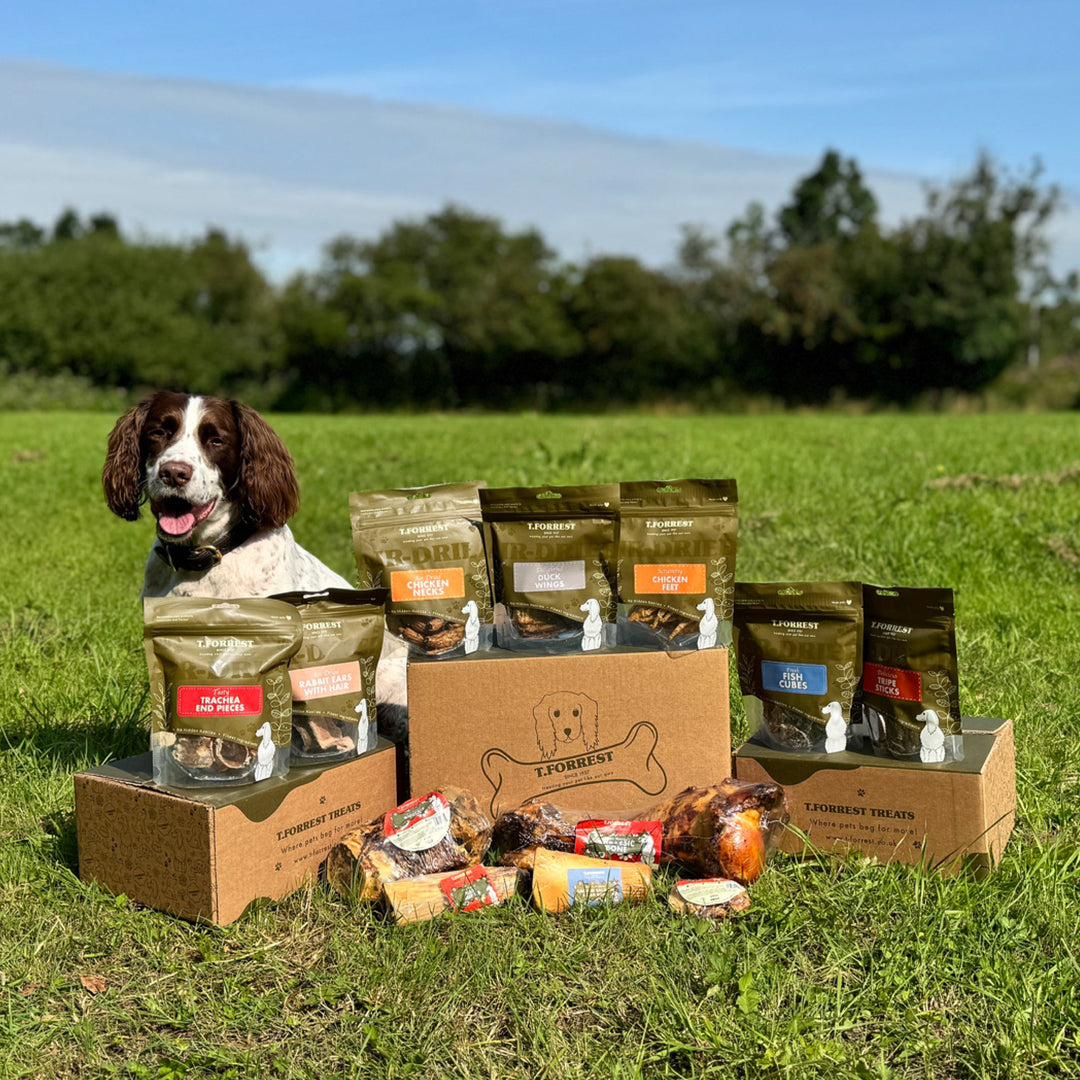
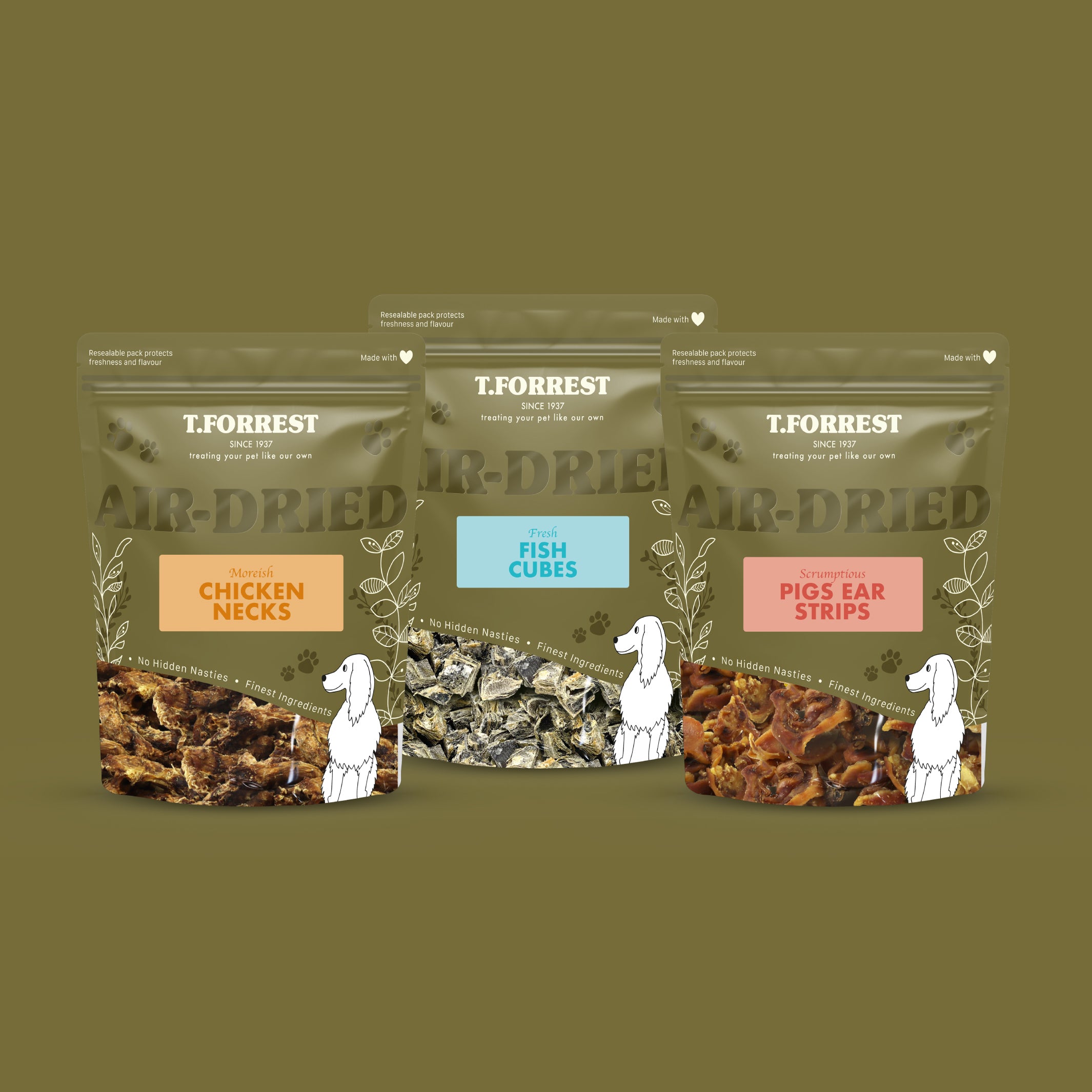
Natural treats are often single ingredient and air dried, with no artificial additives or preservatives. So are they the right choice for your dog and is there enough range to cut out processed treats?
What ingredients to look for (and what to avoid)
There is no single ingredient that is best or worst for every dog, but there are several things you should consider with all dog treats you purchase. This includes:
- A clear ingredient list
- The protein source
- Grain & gluten
- Rawhide treats
- Preservatives and additives
Single ingredient treats are straightforward as they are often 100% beef, chicken or whichever protein you choose. The more ingredients a treat has, the higher chance there is of triggering allergies or digestive issues, whilst it may not be great for their overall health.
With 37% of dog owners saying they consider the source of ingredients when purchasing a treat*, more and more people are carefully examining what ingredients they feed their dog. Manufacturers therefore should make ingredient lists clear, whilst owners should avoid treats that have lots of added ingredients, or rawhide which can cause bigger health issues.
Make sure to clearly check the protein source too. Trying different proteins and seeing what your dog reacts best to and enjoys the most can be a serious game changer, whilst many dogs are allergic to certain proteins such as chicken.
Are natural dog treats healthier?
Generally, natural dog treats are healthier for your dog. However, this still depends on factors such as your dog's age, size and breed, as well as their own dietary requirements. Just because a dog treat contains the word 'natural' does also not mean it's healthy. Natural treats can still be high in fat or calories which should be part of an overall balanced diet.
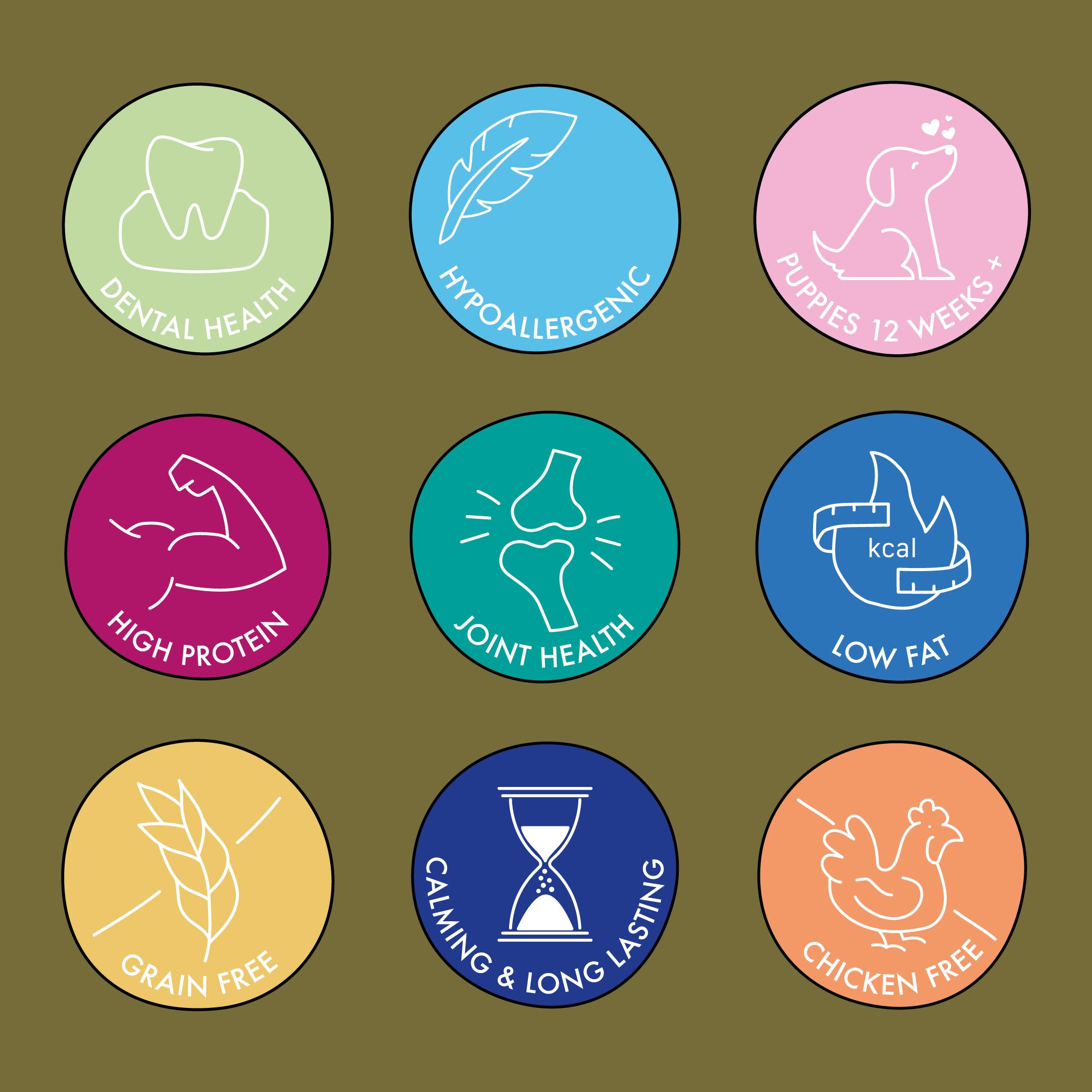
At T.Forrest, we focus on natural, minimally processed treats that are slowly air dried. This means many of our treats are low fat and high in protein, whilst air drying removes moisture and maintains nutrients and vitamins that make our treats so good for your dog.
When considering natural treats, make sure treats still have a clear ingredient list, do not have any additional ingredients even when air dried, and have a healthy amount of calories, protein and fat for your dog to enjoy. With many proteins available suitable for dogs of all sizes and breeds, there's definitely enough to choose natural over processed.
Ingredients that benefit your dog
There are a huge amount of ingredients that are beneficial to your dog, that can be found across a range of proteins. Not only does this benefit your dogs overall health, by using treats that are minimally processed, it supports with easy digestion and reducing the likelihood of triggering allergies. Some ingredients commonly found in proteins include:
- Glucosamine: Glucosamine is associated with maintaining healthy cartilage and supporting normal joint function. It may be found in treats made from animal connective tissues, including chicken, turkey, beef, duck, venison, boar, rabbit, buffalo, lamb, goat and pork.
- Chondroitin:Also supporting healthy joint function and cartilage, it can be found naturally in chicken, turkey, beef, duck, venison, boar, rabbit, buffalo, lamb, goat and pork.
- Omega-3 fatty acids: Omega-3s are important fatty acids that support normal skin and coat health, as well as joint function. Fish is particularly well known as a source of omega-3 fatty acids, although it can be found in other proteins too.
- Collagen: A structural protein found throughout the body, particularly in connective tissues such as skin, cartilage, tendons and ligaments. Natural sources include proteins such as chicken, turkey, beef, duck, venison, boar, rabbit, buffalo, lamb, goat and pork.
- Protein & amino acids: Protein provides the amino acids dogs need to maintain and repair muscles, tissues and other structures in the body, whilst also supporting general energy levels to keep your dog active.
Other factors to consider when choosing a dog treat
Ingredients are of course extremely important, but there are other factors that affect what your dog can and should eat. This includes:
- Your dog's size: Larger dogs may be able to manage larger chews, while smaller dogs may need smaller treats
- Their age: Puppies and older dogs can have different dietary and chewing requirements, whilst older dogs may want collagen-rich treats to support joint health.
- Their chewing style: Aggressive chewers may require different products from dogs that gently nibble treats, including long-lasting treats that support dental health
- Their health: Dogs with allergies, intolerances, weight concerns or other health conditions may need specific dietary considerations
- Purpose of the treat: A training treat, dental chew and long-lasting chew all serve different purposes
- Portion size: Even high-quality treats should be given in moderation
Treats should make up around 10% of your dog's daily calorie intake. Using long-lasting treats that are good for dental health is a great way to reduce calorie intake but still reward your dog and keep them mentally stimulated. If you are unsure of what treats and how many you can feed your dog, please consult your vet.
Where to order healthy treats
T.Forrest & Sons is one of the best places to order healthy and quality dog treats. We pride ourselves on using only natural ingredients, sourcing from the UK where possible and manufacturing in our Samlesbury based factory. Going through our air drying process, dog treats have a long shelf life and are packed with flavour.
FAQs
Should you avoid treats with additives and preservatives?
Additives and preservatives are not automatically harmful, but some owners prefer treats with fewer artificial ingredients, less likely to trigger digestive issues. Our survey found that 93% of respondents would avoid highly processed or rawhide treats*, indicating a strong preference for simpler treat options.
Does the quality of ingredients justify paying more
For many owners, yes. 51% of owners said they would pay more for higher-quality*, natural treats, while a further 47% said they would sometimes pay more*. However, 63% said they look for a balance between quality and price*.
Are single ingredient dog treats better?
Single-ingredient treats make it easier to understand exactly what your dog is eating and identify specific proteins or ingredients. However, they are not automatically better for every dog. The most suitable treat depends on your dog's individual dietary needs, preferences and health requirements.