


Cleaning Your Dogs Teeth
Dog teeth cleaning is an important part of being a pet parent. We need to ensure their teeth and gums are healthy to prevent tooth decay and bad breath.
According to a recent survey over half of the dog owners say their pets have bad breath. However, they believe it’s a normal part of dog ownership
It also found that only 1 in 10 dog owners has sought veterinary advice about their dog’s breath. Only a fifth would worry about it being a sign of a more serious health concern.
We like a little kiss and a snuggle with our dogs and soon notice if their breath is a little bit whiffy! But why? Here is our guide to dental health and fresh breath. In this article:
- Signs of bad teeth and gum health
- How to help keep their mouth healthy
- Best dog treats for dental health
- How to clean your dogs' teeth
Signs of bad teeth and gum health
Tooth and gum disease

- Accumulation of brown tartar.
- Painful when eating.
- Their gums bleed.
- They are drooling (more than usual).
- They drop food.
- They are not happy about you touching their mouths.
Licking of the anal area
If you’ve got a dog with an itchy bottom, he’ll lick his anus where anal gland fluid get's on to his tongue. This smells pretty bad and is be a sign that his anal glands need expressing. This can be done quickly and painlessly by your vet.
Things stuck in the mouth
If something gets stuck in your dog’s mouth, a stick for instance. It will cause an infection and will cause a smell as it starts to rot. You will also see your dog pawing at their mouth.
Kidney, liver disease and diabetes
If your dog is unwell or is drinking more than normal as well as having bad breath. Then they may be poorly and need veterinary care.
Gut problems
A gut infection or blockage can make your dog’s breath smelly. You will often notice other signs such as vomiting, or diarrhoea before you notice the bad breath.
How to help keep their mouth healthy
Healthy diet
Ensure your dog's diet is healthy and nutritious. Make sure to use natural foods and treats that support with dental health and naturally cleaning your dogs gums.
Regular dental checks
Dogs investigate with their mouths so dog dental cleaning is important. As owners, we need to check in their mouths regularly. Get into the habit of regularly checking your dog's mouth. Gums should be a nice healthy pink colour and their teeth should be reasonably white. Look for changes in their gum condition, colour of their teeth and a general look around to check everything is as it should be. 
Cleaning
Just like humans, unless teeth are cleaned on a regular basis a film of sticky plaque can build up. Dog dental cleaning removes it, preventing it from hardening and turning into brown tartar. Since tartar can not be removed by brushing resulting in a visit to the vet. The vet removes tartar whilst your pooch is under general anaesthetic.
Dog chews
Provide your dog with a natural dog treat to promote chewing and reduce plaque buildup.
Best dog treats for dental health
Dogs that chew actively have less plaque build-up and can reduce plaque by nearly 70%.
Giving your dog a treat regularly will help with the cleaning of your dogs teeth. It will help look after their teeth in several ways.
Firstly, the action of chewing can help to physically shift plaque and tartar. In addition, chewing stimulates the release of saliva, which in turn can help to flush away bacteria and debris which would otherwise end up as plaque. Always choose one made from natural ingredients
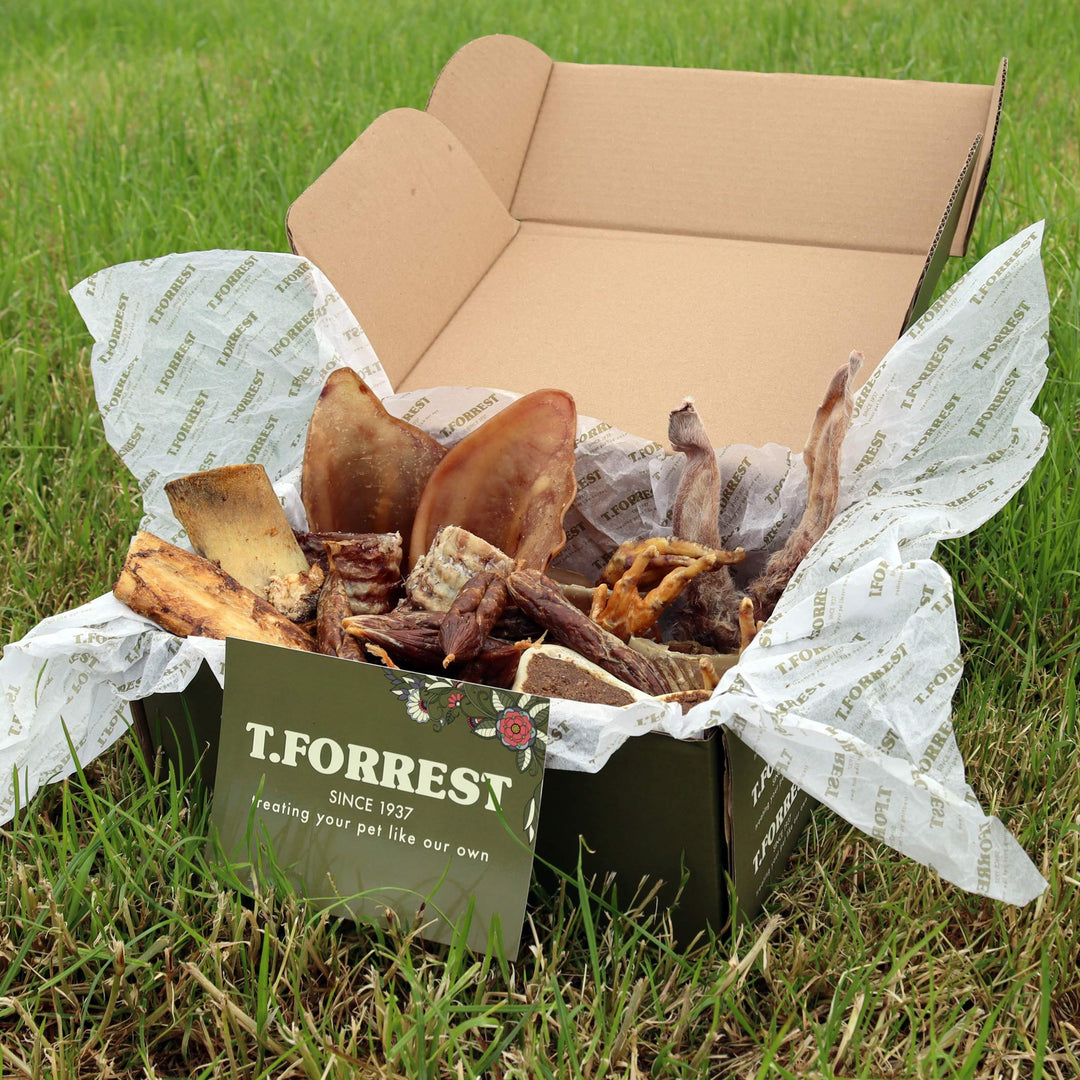
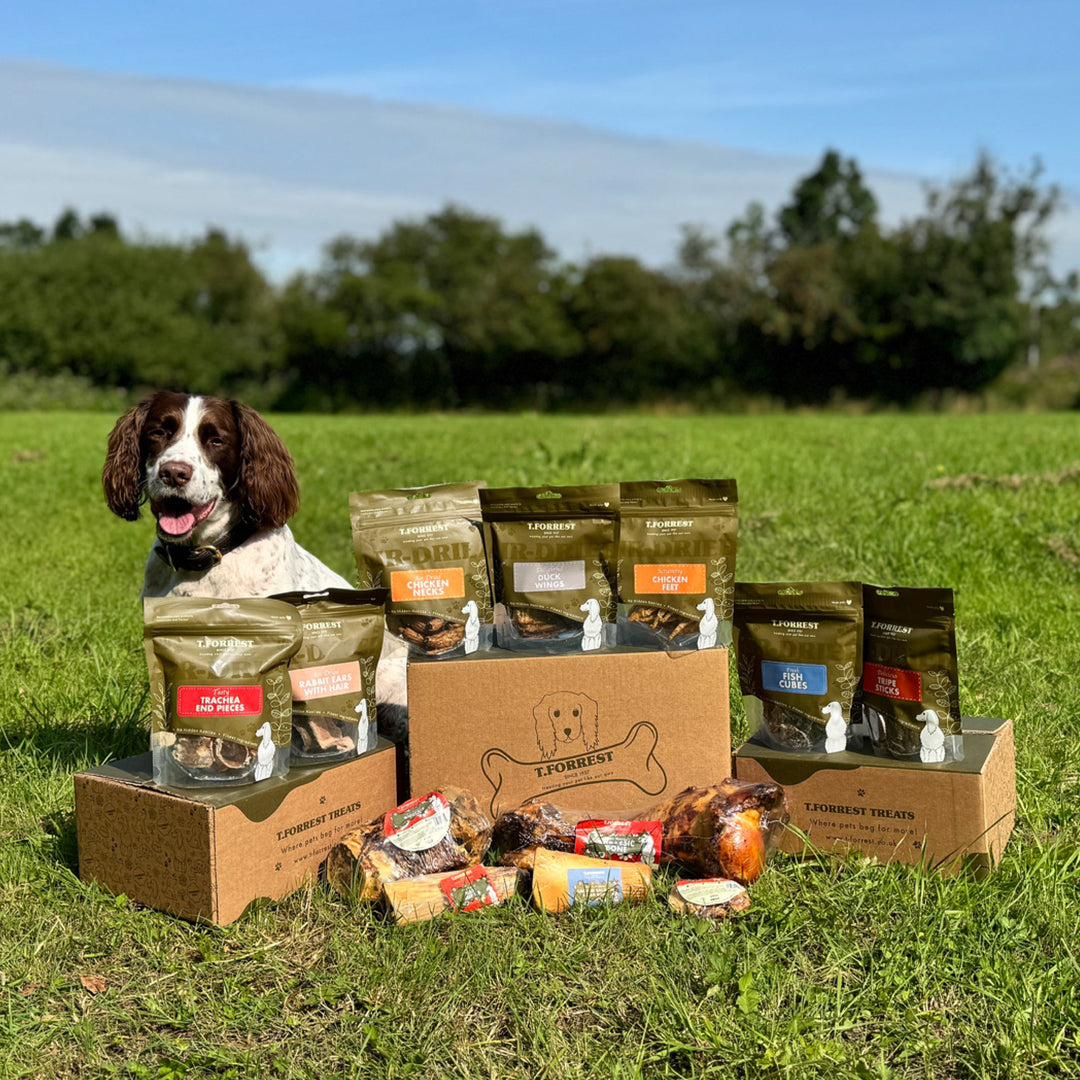
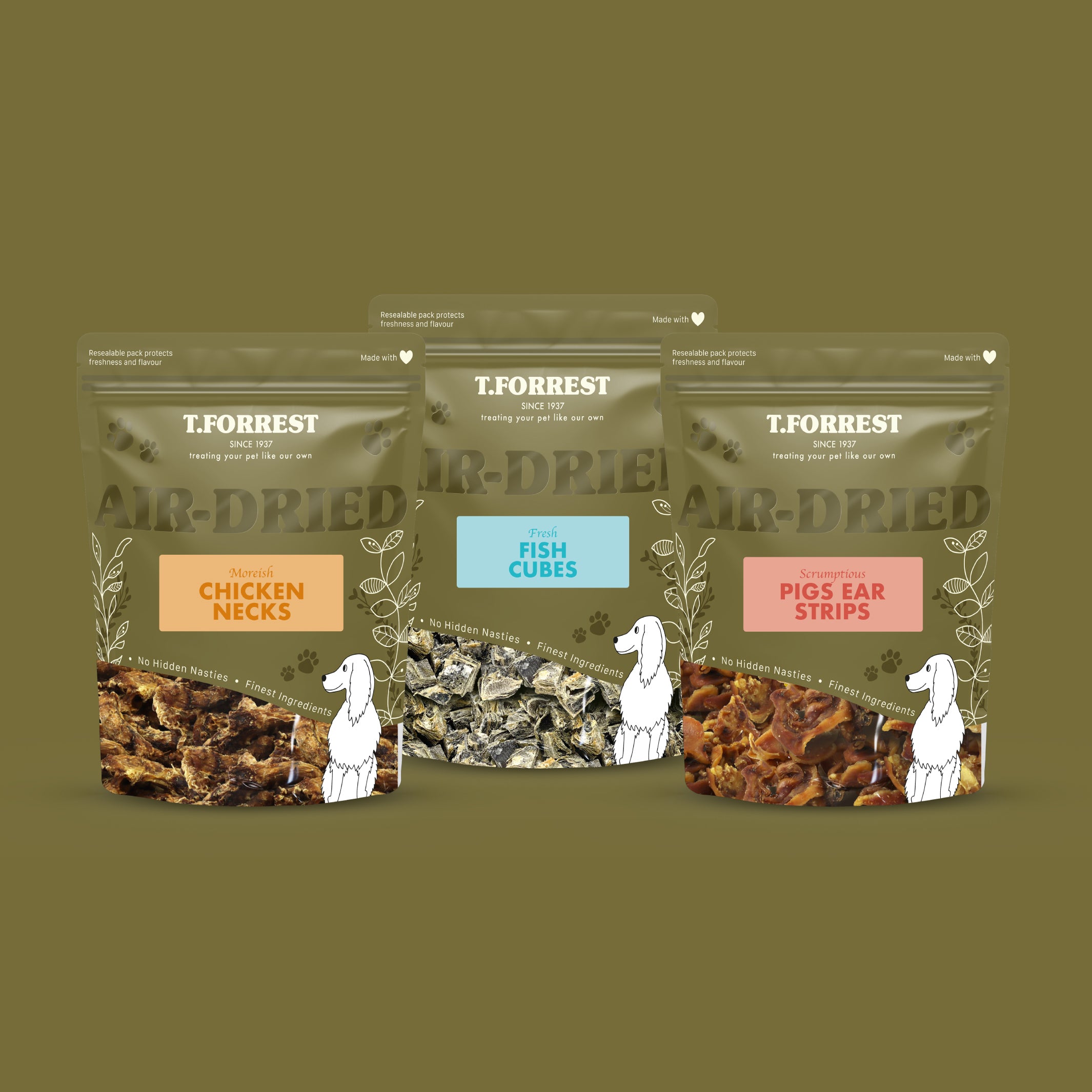
All our treats are made from natural ingredients and produced to the highest quality to ensure your pet gets the best. Here’s just 3 of our full range of treats that can help keep your four-legged friends' teeth and gums healthy.
Chicken feet
Ideal for dogs of all breeds and sizes, chicken’s feet are air-dried making them the perfect chewy treat for our canine pals.
Full of Glucosamine and essential nutrients for good gum health and removing particles of plaque as they munch their way through these tasty morsels.
Pigs ears
These treats are the ultimate boredom buster, extremely chew and long-lasting they act as nature toothbrushes. Stimulating the release of saliva, flushing away bacteria and debris which would otherwise end up as plaque.
We can’t guarantee to give them a pearly white smile, but our Pigs Ears will keep your dog’s teeth and gums healthy therefore helping to keep their breath fresher.
Mini roast bone
How to clean your dog's teeth
For those of you clean to manually scrub your dog's teeth clean, this can take A LOT of training and care. It's also important to use brushes which are suitable and look after your dog's teeth and gums, alongside toothpaste which minimises bad breath and is healthy for your dog and their oral hygiene.
Luckily, we've put together some handy instructions to get your dog into the habit of brushing their teeth:
- Firstly, you will need your dog to be comfortable resting their head on your palm and staying still for you to brush. This means holding your palm out and using your other hand to hold a treat just in front of their nose until they have placed their head on your palm.
- Continue to do this until your dog is understanding, before slowly phasing out the treat. Start to add a verbal cue, whilst moving out your treat holding hand.
- Once this is mastered, you can begin your journey to brushing. Firstly, get your dog to rest their chin on your hand and touch the outside of their lips, and their upper and lower jaw, rewarding them with a treat. Repeat until comfortable.
- Once they are comfortable with this, start to slide a thing inside your dog's upper lip, and running your finger over their gums, again rewarding with a treat. Repeat this with the lower lip and jaws. Repeat until comfortable.
- You also need to keep your dog comfortable with your hand on top of their snout, as whilst brushing your hand may move about regularly. Place your hand on their snout and give them a reward, before also touching and lifting their lips. Repeat until comfortable.
- Next, begin to touch your dog's teeth and at this point, you don't need to open your dog's mouth. Reward them with treats and repeat until they are comfortable with this.
- Now that your dog is comfortable with their teeth, gums and lips being touched, you can begin to brush, using your finger to brush a couple of teeth in a circular motion. Over a few sessions, build up until you can brush all their teeth, and continue to reward your dog.
- After a few sessions doing this, add in toothpaste and continue to use your finger, whilst rewarding your dog.
- Once they are comfortable with this, add the toothpaste to a brush, allowing your dog to sniff or lick to the toothpaste, before using the brush.
Remember to reward your dog and give lots of positive encouragement during each steps, and being patient with your dog until they are comfortable.